Painting Production Line

- All
- Product Name
- Product Keyword
- Product Model
- Product Summary
- Product Description
- Multi Field Search


Views: 0 Author: Site Editor Publish Time: 2026-03-16 Origin: Site


Coating equipment plays a vital role in modern manufacturing, ensuring products achieve top-quality finishes while boosting production efficiency. From spray systems to advanced HPC internal surface coating machines, understanding different coating equipment types helps you select the right tools for your operation. Whether you need precision liquid coatings, durable powder finishes, or specialized DLC applications, choosing high-performance coating machines can transform your workflow. Let’s explore the top 10 coating equipment solutions that elevate productivity and meet the demands of today’s industrial standards.
Coating equipment is more than just machinery. It’s the essential tool that lets manufacturers apply protective or decorative layers efficiently, forming the backbone of any coating production line. Beyond protection, it enhances durability, aesthetics, and overall product performance. Modern systems often rely on integrated coating engineering, combining automation, precision control, and smart monitoring for consistent results. From sleek automotive finishes to polished electronics casings, proper coating equipment ensures every product meets high standards, saving time, reducing waste, and boosting production efficiency.
Some machines need a human touch. Manual systems, like hand spray guns or small dip tanks, give control over tricky shapes. They’re flexible but can be slower and more prone to inconsistencies.
Automated systems handle tasks faster and more precisely. Robotics and programmable machines apply coatings consistently across many parts. They also reduce overspray, material waste, and operator fatigue. Choosing between manual or automated depends on production scale, budget, and required precision.
High-performance equipment isn’t just faster. It saves materials, reduces downtime, and improves repeatability. Here are the main perks:
Efficiency: Apply coatings quickly without compromising quality.
Durability: Better machines ensure thicker, consistent layers.
Reduced Waste: Precise application cuts material loss.
Adaptability: Handles multiple coating types and materials.
Consistency: Achieve uniform finishes every time, across batches.
It’s an investment that pays off over time. Even small improvements in efficiency or finish quality can make a huge difference across production runs.
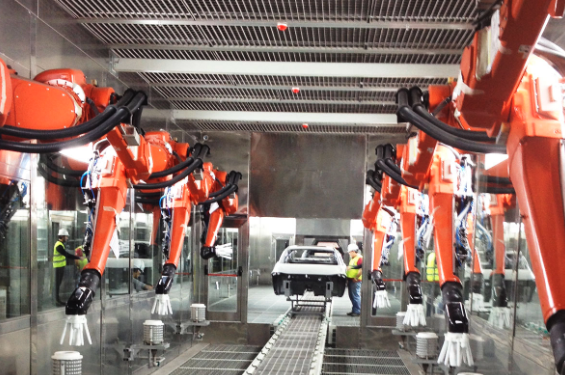
Understanding the most effective coating equipment can transform production quality. Each machine serves a unique role, and knowing their capabilities helps you choose wisely. Below, we break down the top 10 coating machines for optimal performance, including how they work, key features, pros and cons, and typical applications.
| Equipment | Coating Type | Key Advantages | Potential Drawbacks | Typical Materials | Industries |
|---|---|---|---|---|---|
| Spray Coater | Liquid | Even coverage, versatile | Overspray, material waste | Metals, plastics | Automotive, electronics |
| Powder Coater | Powder | Durable finish, high adhesion | Requires curing, conductive surfaces only | Metals, wood | Furniture, metal fabrication |
| Dip Coater | Thick liquid | Uniform coating, complex shapes | Slower drying, high material use | Plastics, glass | Small machinery, medical tools |
| Roll Coater | Thin liquid | Fast application, low waste | Flat surfaces only | Wood, metal sheets | Laminates, paneling |
| Electrostatic Sprayer | Charged particles | Reduced overspray, strong adhesion | Non-conductive limits | Metals, plastics | Automotive, metal parts |
| Centrifugal Coater | Thin film | Quick drying, uniform layer | Particle size limits | Ceramics, glass | Beads, small components |
| Ultrasonic Coater | Fine coatings | Precise, minimal waste | Slow for large parts | Electronics, metals | Precision components |
| Vacuum Coater | Thin-film | High purity, controlled layers | Expensive, technical | Glass, metals, optics | Optics, semiconductors |
| Plasma Coater | Surface treatment | Low-temperature, strong adhesion | Complex setup | Plastics, metals | Composites, aerospace |
| HPC Internal Surface Coating | DLC coatings | Uniform deposition, corrosion resistance | High initial cost | Pipelines, tubes | Oil, gas, chemicals |
Spray & Electrostatic Coaters – Ideal for even coverage on metals and plastics; widely used in automotive and electronics.
Powder & Roll Coaters – Great for durable finishes on flat surfaces; furniture and metal fabrication benefit most.
Dip & Centrifugal Coaters – Perfect for complex shapes and precise thin layers; useful in decorative and small machinery parts.
Ultrasonic & Vacuum Coaters – Offer high precision and uniformity; mostly for optics, electronics, and high-value components.
Plasma & HPC Internal Coaters – Specialized for adhesion enhancement and pipeline protection; used in aerospace, oil, and chemical industries.
Keeping coating equipment in top shape is crucial for consistent quality, efficiency, and the smooth operation of any coating production line. Regular care prevents unexpected downtime, costly repairs, and ensures compliance when using environmental protection equipment in modern facilities.
Start each shift by checking key components to maintain optimal coating engineering performance:
Fluid levels: Ensure hydraulic, coolant, or lubrication fluids are adequate.
Filters: Clean or replace air and fluid filters to avoid clogs that affect coating quality.
Wear points: Look for abrasion, loose parts, or leaks that could disrupt integrated coating engineering systems.
Moving parts need proper lubrication to reduce friction and prevent wear. Follow manufacturer-recommended schedules to keep each component running smoothly. Using the correct lubricant is essential; the wrong type can damage sensitive coating equipment. Both skipped and excessive lubrication may cause malfunctions, so a consistent routine is key for maintaining coating production line efficiency and longevity.
Operators familiar with coating engineering equipment save time and cut costs. Training them on routine troubleshooting steps allows quick identification of issues before they escalate. Letting operators safely perform minor repairs keeps production flowing and reduces dependence on external service calls. Skilled operators improve efficiency and protect the performance of integrated coating engineering systems.
Preventive maintenance focuses on long-term reliability for any coating production line:
Schedule regular inspections and replace worn parts on time.
Maintain detailed service records to spot recurring issues.
Well-maintained machines last longer, operate more efficiently, and minimize downtime.
Companies following maintenance best practices often see:
15–20% increase in uptime.
Reduced defects and rework costs.
Longer equipment lifespan, saving thousands in replacement costs.
| Maintenance Task | Frequency | Impact |
|---|---|---|
| Fluid level check | Daily | Prevents overheating and hydraulic issues |
| Filter cleaning/replacement | Weekly | Maintains airflow and coating consistency |
| Wear inspection | Daily | Detects early signs of mechanical failure |
| Lubrication | As scheduled | Reduces friction, prevents breakdowns |
| Operator training | Quarterly | Minimizes downtime, improves troubleshooting |
Routine inspections, proper lubrication, and skilled operators together boost efficiency, ensure quality, and safeguard your environmental protection equipment and integrated coating engineering systems.
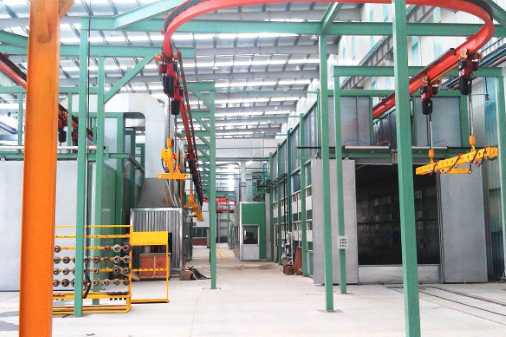
The coating engineering field is evolving rapidly. New technologies help manufacturers improve efficiency, reduce waste, and enhance product quality across the coating production line. These innovations also integrate environmental protection equipment to meet sustainability goals while maintaining high performance.
Modern integrated coating engineering systems often feature robotic arms and AI-driven controls.
They adjust speed, spray patterns, and material flow automatically.
Automation reduces human error and improves consistency.
High-volume sectors like automotive and aerospace gain the most efficiency.
Sensors and IoT devices track coating equipment performance in real time.
Operators monitor thickness, temperature, and humidity instantly.
Systems detect issues early, preventing defects and downtime.
Some coating production line machines can self-correct during operation.
Sustainability drives modern coating engineering.
Water-based coatings lower VOC emissions.
Energy-efficient curing systems cut electricity use.
Environmental protection equipment ensures compliance while maintaining output.
Diamond-Like Carbon (DLC) and plasma coatings deliver superior protection.
Provide wear resistance, corrosion protection, and smooth finishes.
Applied in pipelines, aerospace components, and medical devices.
Require advanced integrated coating engineering systems and trained operators for precision.
AI is transforming coating equipment operation and maintenance.
Predictive maintenance anticipates part wear, avoiding unplanned downtime.
AI-guided coatings adjust application patterns using historical data.
Future systems will be smarter, faster, and more adaptive.
| Innovation | Key Benefit | Industry Examples |
|---|---|---|
| Automation & Robotics | Consistent high-speed coating | Automotive, Electronics |
| Smart Monitoring | Real-time defect prevention | Aerospace, Precision Engineering |
| Eco-Friendly Coatings | Reduced environmental impact | Furniture, Consumer Goods |
| DLC & Plasma Coatings | Enhanced durability | Oil & Gas, Medical Devices |
| AI & Predictive Systems | Reduced downtime, optimized output | All high-performance coating production line operations |
A: Coating equipment ensures uniform application, enhances product durability, aesthetics, and performance. It reduces waste, improves efficiency, and supports compliance with industry standards across automotive, aerospace, electronics, and industrial sectors.
A: Daily inspections, lubrication of moving parts, preventive maintenance, and operator training are key. Proper routines reduce downtime, extend machine lifespan, and maintain consistent coating quality.
A: Match the equipment type to the material—liquid, powder, DLC, or plasma coatings. Test viscosity, substrate properties, and adhesion requirements before scaling production.
A: Automation, AI-guided systems, smart monitoring, energy-efficient and eco-friendly solutions, and advanced coatings like DLC and plasma are driving performance, precision, and sustainability.
Mastering coating equipment can make a real difference in product quality and operational efficiency. By exploring high-performance spray, powder, dip, roll, and advanced plasma or DLC systems, you can find solutions tailored to your production needs. Investing in smart, automated coating equipment not only reduces waste but also saves time. If you’re ready to upgrade your processes, Changzhou Anjia Coating Equipment Co., Ltd. offers reliable, innovative solutions designed to help manufacturers achieve optimal performance and consistent results.


